Where the Conflict Between Artificial Intelligence and Intellectual Property Is Leading
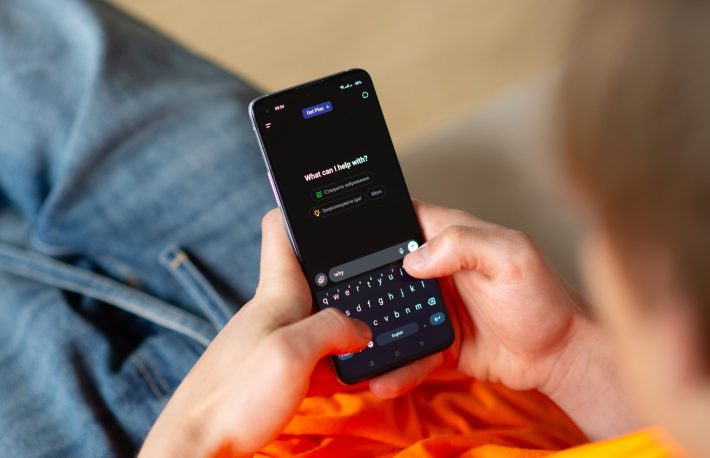
The development of artificial intelligence (AI) has overnight changed the way we access information, educate ourselves, do business, … Leading this revolution is ChatGPT, a tool that answers questions with captivating precision, summarizes complex content, offers solutions, and even hallucinates. All based on a vast body of knowledge. But whose?
The fact is that this knowledge does not belong to the ChatGPT tool or to OpenAI. The question that arises is: for how long, to what extent, and how can AI continue to use publicly accessible knowledge and information.
Artificial intelligence today shapes access to knowledge, but who truly owns it remains an open question. Understanding this dilemma is becoming crucial for the future of content, creators, and the entire web.
The answer opens not only legal dilemmas about intellectual property, but also broader questions about the future of the web as we know it – and as we have yet to discover it.
The Question of Content Control
The challenge facing artificial intelligence tools like ChatGPT is the question of how they will provide current and quality answers if they diminish the role of authors.
As a digital marketing expert dealing with website optimization and providing content for this purpose, I often wonder what the future of AI means for the companies I work with.
One of the fundamental points is the question of copyright. The fact is that ChatGPT (and other tools) has used (and still uses) publicly accessible content for its “training,” including that on websites. As long as Google was doing this, the problems were not pronounced, as it provided visitors in exchange for “exploiting” the content.
With ChatGPT, however, the situation is different. It rarely cites sources, and even if it did, the user has already received the information, so visiting the source no longer interests them. The reference itself has little value.
Loss of Control Over Intellectual Property
Most companies that have invested years in quality and relevant content for users (within content marketing and optimization) have lost control over their intellectual property with the arrival of AI. It is now accessible to all users of artificial intelligence tools. ChatGPT was specifically trained using publicly accessible content, with some of its answers appearing suspiciously similar to certain articles from which it draws information.
Various lawsuits are underway, whose decisions will strongly influence further developments. Even if regulations do not materialize, it is clear that no one will create content for free.
Built on the Work of Content Creators
ChatGPT builds its answers on the basis of a vast amount of data collected from websites, books, articles, and other sources that are the product of the effort, knowledge, and time of journalists, writers, researchers, and others. Although these are publicly accessible pieces of information, the fact that ChatGPT does not always cite sources raises concerns, nor do the creators of this content receive credit or financial benefits for their work.
The question of intellectual property opened with the arrival of Google. Search engines essentially exploited content, but at the same time enabled traffic for creators and thus financial support for their business models. Cases such as the Copiepresse lawsuit in Belgium and the European copyright directive from 2019 have shown that a balance between content usability and creators’ rights is achievable – albeit not without difficulties.
Current Disputes and the Idea of AI Taxation
Recently, the development of artificial intelligence has further accelerated debates on the question of intellectual property theft. In the USA, a dispute is ongoing between OpenAI and various publishers (including The New York Times), who claim that ChatGPT illegally uses their copyrighted texts when generating answers.
At the European Union level, discussions are underway about introducing a so-called “AI tax” – a special compensation that providers of large language models would have to pay for using copyrighted works in training their systems.
The New York Times Lawsuit Against OpenAI and Microsoft
In August 2023, The New York Times filed a high-profile lawsuit against OpenAI and Microsoft, alleging that the ChatGPT chatbot, together with Microsoft’s technology, illegally used their copyrighted articles to train language models. According to the newspaper’s claims, the companies are unjustly exploiting journalistic work without appropriate payment of licensing fees or compensation. In addition to demands for financial compensation, The New York Times also proposes the destruction of all models and data based on alleged copyright violations.
Legal experts from Harvard University also emphasize that this is the first major legal test of how courts in the USA will treat artificial intelligence within the framework of copyright law. Rachel Reed (Harvard Law Today, March 22, 2024) summarizes the positions of Mason Kortz, a lecturer at Harvard Law School Cyberlaw Clinic, who points out that the crux of the dispute is that ChatGPT allegedly copied millions of articles for its “knowledge base” without appropriate licenses. In the analysis, she highlights three key points of the accusation:
- Infringement in model training, because original works are copied for learning;
- The model as an alleged derivative work from copyrighted articles;
- Direct reproduction of content (so-called memorization), where ChatGPT generates texts that almost literally match the original articles.
OpenAI and Microsoft defend themselves with the justification of so-called fair use, claiming that their models do not replace subscriptions to The New York Times and that the accusations are exaggerated. Nevertheless, this court case will likely significantly outline the future understanding of the legality of AI learning on protected material.
Subject of Ownership: Idea Versus Derivative
American legislation has long distinguished the idea from its derivative. The NY Times claims that their articles as a concrete derivative were used illegally. OpenAI responds that the models do not copy content, but rather learn language and ideational patterns.
How Artificial Intelligence Can Pay for Rights – and Why It Probably Will Not
Various measures are proposed: taxation of artificial intelligence, use of blockchain technology for content traceability, mandatory citation of sources, even treatment of certain models as public goods.
But the reality is that large companies like OpenAI, Microsoft, and Google will likely find ways to reach agreements with major rights holders, while smaller creators will most likely fall out of the system.
The Changing Nature of Intellectual Property
In March and April 2025, Jack Dorsey (co-founder of Twitter) and Elon Musk publicly expressed support for abolishing intellectual property laws. Dorsey called on platform X to “delete all intellectual property laws,” and Musk supported him.
Similarly, OpenAI and Google called on the US government to allow artificial intelligence to learn from copyrighted content without the need for licensing, to accelerate innovation.
These events show that solutions such as taxes do not actually have real foundations. Major players are striving to weaken or abolish creator protections, which can lead to greater power inequality on the internet in the long term.
What the Future Brings
Artificial intelligence already satisfies the need for basic information, but above-average content still requires a human. The shift toward video content and viral entertainment, especially on platforms like TikTok, IG Reels, and YouTube Shorts, is already pushing professionally in-depth content to the margins.
Google’s algorithm still encourages expertise through EEAT criteria, but this does not apply to social media, where emotional response and visual appeal prevail.
In the long term, it is increasingly difficult for experts dealing with complex topics to compete with influencers whose content is focused on personal stories and appearance.
Closing Thought
“The microphone is being handed over” to lay influencers – those who have not earned their words through deep knowledge of fields, but by being shocking enough, controversial enough, willing to attract and draw the admiration of the masses. Not because of expertise, but because of the audience’s simple need for entertainment and their need for an audience.
Already today, it is concerning that most politicians unreservedly indulge in appearing on social networks. Their popularity is not the result of personal merit, but a consequence of their public role, raising the question of whether their profile should actually belong to the public or the state.
With all this, we can only ask: what follows?
Are we entering a time when OnlyFans profile creators will run for office? Will prime ministers redirect attention from serious topics to “heartwarming” performances? Will the future Pope have an Instagram profile?
Related Articles and Sources:
- EUIPO: Navigating the complexities of generative AI
- European Parliament: Artificial Intelligence Act
- Harvard Law Today: Does ChatGPT violate New York Times copyrights?
- The New York Times: The lawsuit against OpenAI and Microsoft
- The Verge: AI and copyright – the battle for content
- Washington Post: Musk and Dorsey call for end to copyright law