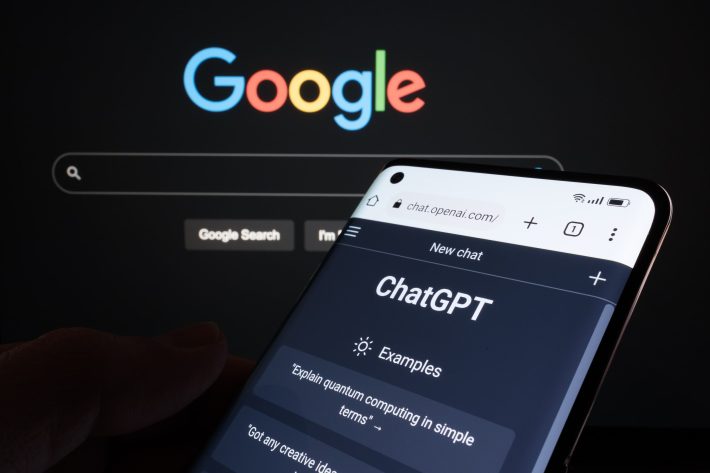
ChatGPT goes commercial – Will advertising be available in ChatGPT?

Sam Altman’s latest statement, as a leading representative of OpenAI, touches on the question of ads in ChatGPT. At first glance it sounds great, but on closer reading it doesn’t add up. Altman said that ads in ChatGPT will be based on the concept of partner, or affiliate referrals. This means that when ChatGPT refers a user to a specific provider, it would receive a commission for it.
At the same time, he claims that such ads will not affect the credibility of the data and information ChatGPT provides. But these two claims actually contradict each other. Why?
If ChatGPT charges a commission for referrals, it can only do so for a company that has agreed to it and accepted the advertising cost. Otherwise, the company will not be among the listed sources—even if it offers a better solution—because there will simply be no basis for issuing an invoice.
OpenAI’s plans to introduce ads in ChatGPT have opened a new debate about the future of the digital economy. In a conversation with Tyler Cowen, CEO Sam Altman directly challenged Google’s advertising model: “Ads on a Google search are dependent on Google doing badly. If it was giving you the best answer, there’d be no reason ever to buy an ad above it.” His thesis is simple—Google makes money when results aren’t good enough.
But can ChatGPT really flip the logic of the internet and make money without distorting the truth?
Google lives off imperfection
The claim that Google shows worse organic results for advertising reasons is completely nonsensical. Google has no reason to deliberately reduce the quality of organic results, because their relevance is exactly what keeps users in the ecosystem. If organic results were truly bad, users would simply go elsewhere—and the value of ad space would collapse with them.
“Ads on a Google search are dependent on Google doing badly. If it was giving you the best answer, there’d be no reason ever to buy an ad above it.”
It is true that, for commercial reasons, Google is increasingly showing ads, its own products, and “featured snippets” above organic results, creating the impression that organic results are being pushed down. But that does not mean they are worse in themselves—rather, they are less visible. The system is therefore optimized for revenue from displaying ads, not for making information worse. Someone at Google even said some time ago that organic clicks are simply a necessary evil. Still, Altman’s statement is not analytical but political: it sounds good because it redirects users’ frustration with Google toward the idea that artificial intelligence will operate more fairly.
ChatGPT and the utopia of “ethical ads”
Altman claims ChatGPT will not go down the same path. Instead of classic ads, AI would be monetized through referrals—with a small commission if the user actually buys or books something via ChatGPT.
“If ChatGPT were accepting payment to put a worse hotel above a better hotel, that’s probably catastrophic for your relationship with ChatGPT.”
The model is supposed to be simple: ChatGPT presents the best recommendation, unaffected by money, and if the user confirms that choice with a purchase, OpenAI gets its share. The key difference: no one pays for a better position in the answer.
Altman says: “If ChatGPT were accepting payment to put a worse hotel above a better hotel, that would be catastrophic for trust.”
The idea is appealing, but it quickly gets complicated when we look at how such a system actually works in practice.
Is monetization a sin?
For OpenAI to charge a commission, it must have a contractual relationship with every platform or provider. No one can be billed for a referral if they are not included in the system. This means that only those who have joined the program—“opt-in” partners—will be shown in the ChatGPT ecosystem.
The outcome is inevitable: ChatGPT can present and enable purchases only among providers that are included in its affiliate system. Those that are not will drop out of the display, or will be shown without a “book now” or “buy now” option. That already means selection—not necessarily by quality, but by inclusion in the commercial network.
Even if OpenAI formally claims that commission does not affect the ranking of results, the system has an internal incentive to favor partners where revenue exists. AI, which should serve objectivity, thus inadvertently becomes part of the economic filtering of the world.
A conversational marketplace
With such a model, ChatGPT becomes more than a search engine—it becomes a marketplace in the form of a conversation. Instead of comparing ten results, the user receives a single “best answer” that can immediately be turned into a purchase.
But if that “best answer” is based only on providers that are in the system, the world shown by artificial intelligence becomes partially closed.
In such a scenario, searching for information will become increasingly dependent on partnerships between companies and artificial intelligence. Anyone not integrated into the platform—through data sources, APIs, or commission agreements—will be invisible to the ChatGPT user.
The paradox
ChatGPT is popular because it works as a neutral adviser that answers without an obvious interest. But if every answer becomes a potential source of revenue, the very thing that gives it credibility—trust—starts to erode.
Altman is right: if ChatGPT were to “sell” worse answers, that would be catastrophic. But the problem is not malice; it is the structure of a system in which paying partners will automatically have an advantage—simply because they enable commission.
Sooner or later, OpenAI will have to decide: maintain complete independence and lose part of its revenue, or monetize its trust—which is a thin line between business success and an ethical compromise.
Conversational capitalism
If Altman’s vision comes true, the shift from search to conversation will mark a new era of the digital economy. From question to purchase will be just one step—and AI will become a new layer between the user and the world of providers.
For companies, this means a new form of SEO: not optimization for a search engine, but for artificial intelligence. Only those included in its data flows will exist in its answers.
Altman’s goal is noble—to create a system that rewards trust and quality. But if ChatGPT shows only those who agree to monetization terms, we will end up in the same place as today: in an ecosystem where truth is not necessarily the most profitable.