
What to do when a customer gives you a 1-star rating?

Companies, in their desire for a good reputation and customer acquisition, strive for the best customer ratings. However, in business, some negative feedback is inevitable, which can be well or poorly argued, or not at all.
I know of a case where a customer received a negative review (1 star) with the comment “everything is fine”. We also know of cases where users, with their “social influence”, in a way extort the provider to either advertise the product, or replace it, or refund the purchase price, even though the buyer is not entitled to it in any way. The fight for exclusively positive reviews is thus already lost in advance. What is interesting, however, is that customers seem to be aware of this.
Namely, if a company only has good reviews, they appear inauthentic, artificial. They raise suspicion that the company might be manipulating reviews. Google (Google My Business), for example, is also aware of the issue of review manipulation and filters out suspicious reviews that it identifies as artificial. For instance, they also filter out reviews if they detect that a company selectively encourages review submission (e.g., only inviting customers they expect to be satisfied to leave reviews).
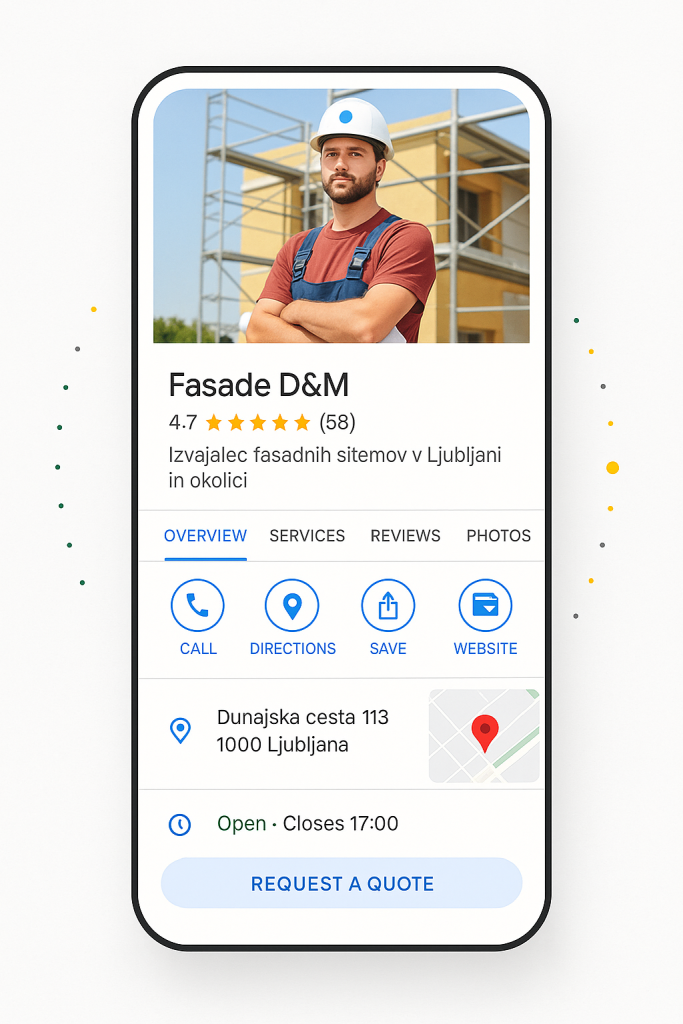
As we mentioned, customers are aware of reality and their “own” nature, so they expect a company to also have negative reviews. These are also the most interesting, the most read. Because we are interested in what other customers’ complaints are, what the “dirty reality” is, and above all, whether they have anything significant to criticize the company for that would bother us. No one is bothered if they see a negative review for a company with the comment “exorbitant prices” or “rude salesperson”. Both can be checked, and we can decide for ourselves whether the prices are reasonable or acceptable, and many might even go to see the “rude salesperson” out of curiosity, even if they wouldn’t otherwise visit the store.
Another story, however, are reviews that are justified and that should concern us as customers. These are cases where someone orders a product and does not receive it, or when someone reports that the company is not responding to a complaint, that the products are of poorer quality than advertised, etc.
The second thing that is worrying for customers is an inadequate handling of negative reviews. Arrogance or hiding bad reviews. An example is a company that responds to a bad review with 10 good reviews. Mathematically, it all adds up, but it creates the impression that bad reviews are being hidden, especially if the company responds inappropriately to them or perhaps not at all.
Psychological Aspect of Customer Trust
Attempting to cover up a negative review with a multitude of positive ones can appear insincere and reduce consumer trust. A study published in the journal Tourism Management showed that the trust of potential customers increases when a company responds to negative reviews with an apology, as this reduces the perceived risk of purchase and contributes to positive customer outcomes.
An interesting finding comes from research published in the Harvard Business Review (2018), which analyzed company responses on the TripAdvisor platform. They found that hotels that started responding to reviews not only improved their average rating but also received more reviews. It seems that the mere fact that a company “listens” and responds influences customer perception and increases their willingness for positive interaction. (Harvard Business Review, 2018 (Proserpio & Zervas))
Customers trust companies that respond well to negative reviews the most
The greatest impact on customer trust is not a perfect rating, but how a company deals with mistakes. A 2023 study (Tourism Management) showed that a negative review followed by a respectful, honest, and constructive company response is more convincing than positive reviews without a response. Consumers perceive such a response as proof that the company takes responsibility, knows how to communicate, and cares about the quality of its relationship with the user.
❝Negative online reviews with company apologies and corrective responses reduce consumer risk perception and improve purchase intention.❞
Source: Tourism Management, Volume 97, 2023 – ScienceDirect
This means that a well-executed response to a bad review can actually be an advantage for a company, as it gains credibility in the eyes of future customers.
How to Respond Correctly to Negative Reviews
Instead of ignoring or concealing negative reviews, it is recommended to:
- Respond quickly and professionally: Timely and polite responses show that the company values feedback and strives for improvement.
- Acknowledge the mistake and apologize: A sincere apology can mitigate the negative effects of a bad experience.
- Offer a solution: Proposing concrete steps to resolve the issue demonstrates the company’s commitment to customer satisfaction.
- Move communication to private channels: After an initial public response, it is advisable to continue communication through private channels to address the issue in more detail.
Conclusion
Negative reviews are not necessarily a bad thing. Responding to them correctly can improve a company’s reputation and strengthen customer trust. Instead of concealing negative ratings, it is more effective for a company to respond to them honestly, professionally, and with concrete solutions.
Is your company also facing negative reviews?
Contact us for advice regarding your presence on Google My Business.
Key Resources and Findings
- Study: Hotel Responses to Negative Reviews Increase Customer Trust Research has shown that the presence of a company’s response to a negative review positively influences perceived care and consumer trust. Key factors were response speed, communication tone, and taking responsibility. “The presence of a company’s response to a negative review positively influences perceived care and consumer trust.”
Source: Tourism Management, 2015 - Empathy and Personalization as Strategies for Restoring Trust The study found that company responses that include empathy, personalization, and acknowledgment of error effectively restore consumer trust. Conversely, responses with denial or excuses reduce trust. “Empathy, personalization, and acknowledgment of error in company responses effectively restore consumer trust.”
Source: Management Response Strategies to a Negative Online Review, 2022 - Apology as a Key Element in Reducing Perceived Risk Research has shown that an apology in response to a negative review reduces perceived risk among consumers and increases their willingness to purchase. “An apology in response to a negative review reduces perceived risk among consumers and increases their willingness to purchase.”
Source: Tourism Management, 2023 - Responding to Reviews Leads to Better Ratings and Increased Engagement An analysis of TripAdvisor data showed that hotels that started responding to reviews received 12% more reviews and increased their average rating by 0.12 stars. “Hotels that started responding to reviews received 12% more reviews and increased their average rating by 0.12 stars.”
Source: Harvard Business Review, 2018


