
Who’s behind the ads you see? Google offers a clear answer

Digital advertising was long seen as an area where users had no insight into who was advertising to them and why. With the launch of the Ads Transparency Center, Google took an important step toward greater transparency. The tool, publicly available since March 2023, provides insight into ads from all verified advertisers across Google platforms—from Search to YouTube and the Display Network.
Why Google introduced the Transparency Center
In recent years, digital advertising has become one of the key marketing channels, but also a space for misinformation, misleading offers, and covert advertising. Users, regulators, and journalists have therefore increasingly demanded more transparency and accountability. The Transparency Center is Google’s response to these demands—it provides insight into who is behind individual ads, where and when they ran, and what messages advertisers used.
By introducing this tool, Google strengthens user trust while encouraging advertisers to operate more ethically and transparently. It is part of a broader trend in which digital platforms are introducing more oversight of their own advertising systems.
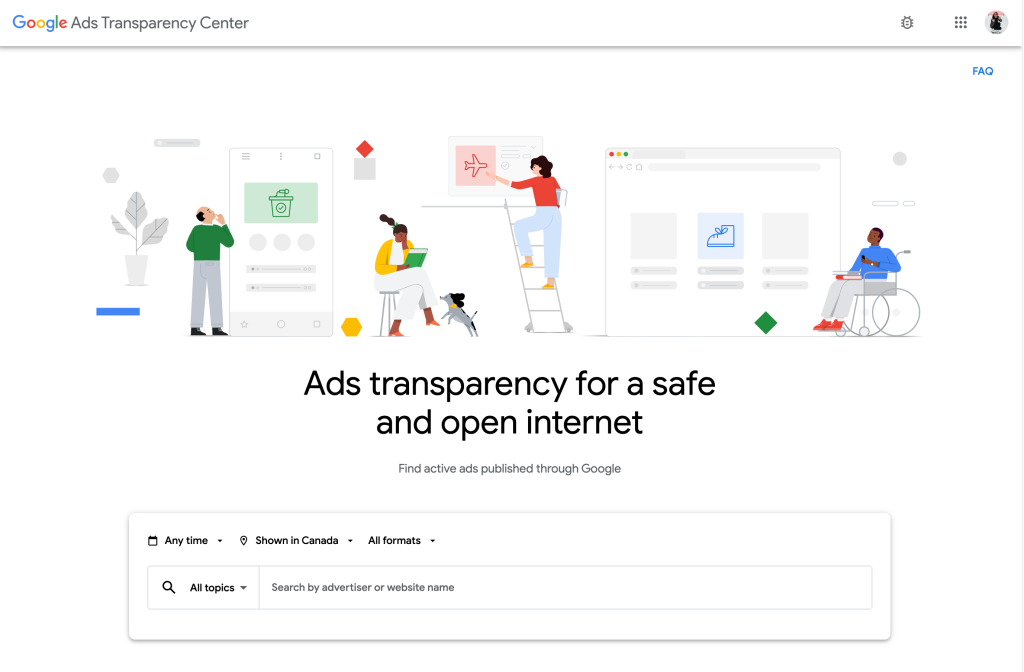
What the Google Ads Transparency Center enables
The Transparency Center allows anyone to search for ads from a specific advertiser—either by company name or by domain. Users can see all active and past ads, including images, videos, or text formats, and obtain data on where they were shown and during which period.
In addition to basic information, it also shows whether the advertiser is verified by Google, which further strengthens trust. If a user sees an ad in Search or on YouTube, they can click the three dots next to the ad and select “More about this advertiser” to open the company’s full profile and its active ads.
For advertisers and marketers, this is an invaluable tool for gaining insight into competitors’ campaigns, finding inspiration for ad creatives, and tracking industry trends.
What the Transparency Center does not show
Although it brings greater transparency, the Transparency Center does not reveal everything. It does not provide users with performance data for individual ads, such as click-through rates, budgets, or conversions. In addition, it does not include ads from unverified advertisers, which means not all campaigns in the Google Ads ecosystem are covered.
Search is designed around advertisers and domains, not keywords or topics, so the tool is not suitable for analysing market niches, but primarily for reviewing the activity of individual companies.
Who benefits from this tool
For consumers, the Transparency Center is primarily a tool for greater safety and trust. It provides insight into who is advertising to them, what is being promoted, and in which countries. Users can more quickly identify suspicious or misleading ads and report them.
For marketers and businesses, it is a valuable source of competitive intelligence. Advertisers can study the messaging, formats, and visual approaches of other brands, which helps them plan their own campaigns. In addition, the Transparency Center is proof that every advertising activity must align with best practices and be open to public scrutiny.
For journalists and researchers, it represents a new tool for monitoring the impact of advertising campaigns and uncovering trends in the political, economic, or social landscape.
How to use the Transparency Center
No sign-in or access to a Google Ads account is required. Simply visit adstransparency.google.com and enter a company name or website domain in the search field. You can filter results by country, time period, or ad type. Clicking on an individual ad displays additional details such as run dates, ad format, and reach area.
Those who want to quickly check an advertiser directly from Google results or YouTube can click the three dots next to the ad and select “More about this advertiser”. This takes you to the Transparency Center, where the full portfolio of their ads is displayed.
Why the Transparency Center matters
The introduction of the Transparency Center means greater accountability for advertisers and more control for users. Ads are now publicly visible, which reduces the possibility of deception and increases the quality of the advertising space. For the digital marketing industry, it also means greater professionalisation—every campaign must be prepared with the awareness that anyone can review it.
Although the tool does not reveal all data about advertising strategies, it represents a key step toward a more open and trustworthy online environment.
Conclusion
The Google Ads Transparency Center is more than just a tool—it is a signal of change in the world of digital advertising. It provides insight into how advertising works, who is behind individual campaigns, and how market practices are evolving. For advertisers, it is an opportunity to learn and analyse; for users, it is a step toward greater control and understanding of the world of online ads.