
Digital advertising of foreign online casinos in Slovenia: between bans and real-world practice

On paper, the Slovenian gambling market is relatively closed and regulated. In practice, however, something entirely different is happening: users have not disappeared—they have moved to international platforms, and advertising has moved with them.
The key question today is no longer whether foreign online casinos reach Slovenian users, but how they manage to do so—despite the restrictions.
The market exists, regardless of regulation
Estimates show that the Slovenian gambling market reaches around €500 million per year, of which €100–150 million is already in the online segment. Sports betting represents a significant part of that pie.
This figure is key to understanding advertising:
where there is a market, there is also an interest in acquiring users.
Blocking individual operators does not mean demand disappears. It only means the path by which the user reaches the service changes.
As is often shown in practice:
users do not disappear—they start looking for workarounds.
How foreign casinos actually reach Slovenian users
Because direct advertising is often not possible or is restricted, international operators rely on a multi-layered digital ecosystem. It is based on a combination of SEO, affiliate models, and content platforms.
The most common channels are:
- SEO-optimised content targeting queries such as “online casino Slovenia” or “online sports betting”
- review and comparison sites that act as an interface between the user and the operator
- affiliate links that enable conversion tracking and optimisation
- forums and communities where experiences and alternative access methods are shared
This approach means that users often do not even feel it is advertising in the classic sense, but rather informational content.
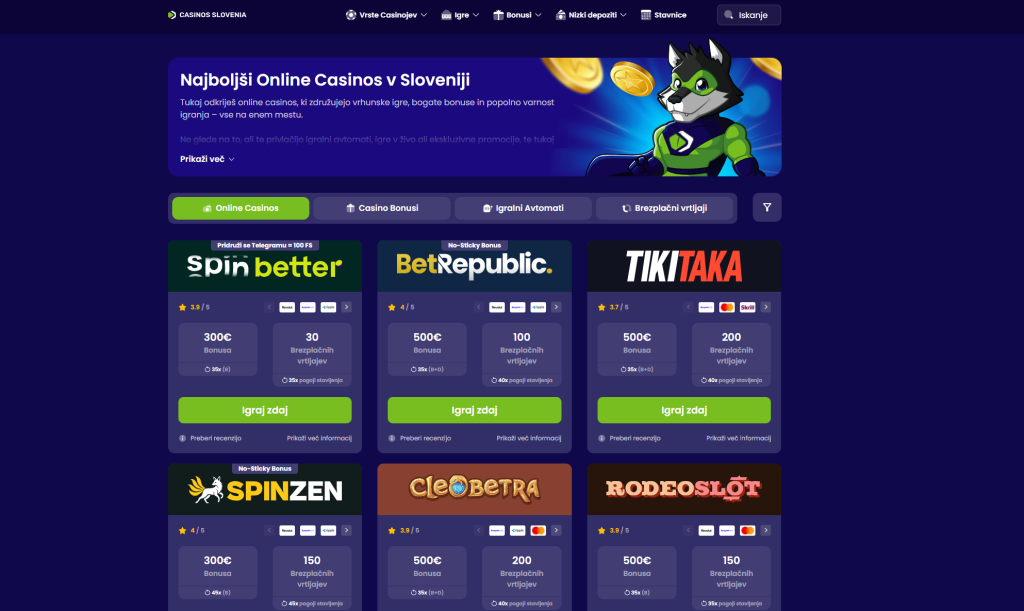
A good example of this “intermediate layer” are aggregation sites such as https://casinos-slovenia.com/, which bring together offers from various international casinos and enable comparison of key elements. In practice, such platforms perform the function of filtering the market and directing users.
The affiliate model as the backbone of the system
In most cases, advertising does not take place directly between the operator and the user, but through affiliate partners.
This is a model where:
- a partner (e.g., a media or content site) brings in the user,
- the operator pays a commission based on activity (CPA or revenue share),
- the entire process is based on measurability and optimisation.
This model is crucial for unlicensed or harder-to-access operators, as it enables scaling without direct exposure.
At the same time, it creates an entire micro-ecosystem of sites that are not necessarily primarily “advertising” sites, but informational, comparative, or analytical.
Regulation and its unintended effect
Slovenia uses a concession model with a limited number of operators, which is meant to ensure oversight and user protection. In practice, however, the opposite effect occurs.
As highlighted by the emedia.si portal, restricting access to large, regulated operators does not lead to reduced activity, but to its redirection. Users who cannot access platforms such as Bet365 do not stop playing—they look for alternatives, often in less regulated jurisdictions.
This creates a paradox in the system:
- highly regulated operators are restricted,
- while less regulated providers remain accessible.
As a result, part of the market moves into an environment with a lower level of oversight, which means greater risk for the user and, at the same time, an outflow of financial flows from the local system.
Offer quality as the driver of migration
Advertising alone would not be effective if there were no real difference in the offer.
Users often notice:
- a wider selection of games,
- more competitive odds,
- more advanced user interfaces,
- more flexible bonus systems.
This creates additional motivation to switch to international platforms, while advertising acts as a catalyst, not the primary reason.
Risks for the user
A shift into a less regulated environment also has consequences.
Differences between licences (e.g., MGA vs Curaçao) mean:
- different levels of user protection,
- different dispute resolution mechanisms,
- greater risk with less supervised operators.
This is an important aspect that advertising often does not highlight, yet it has long-term consequences for the user experience.
The market does not stop—it only reshapes
The basic dynamics remain the same:
the gambling market does not disappear—it adapts to restrictions.
In the Slovenian case, this means:
- a shift of users to international platforms,
- the development of alternative advertising channels,
- the emergence of intermediate layers (affiliate, review, aggregators).
As practice shows:
blocking an individual operator does not stop gambling—it only changes the way of access. And it is precisely in this space, between regulation and real-world use, that the main part of digital marketing in the iGaming industry takes place today.


